
Minikino Film Week 11 – Interview with ‘Tutaha Subang: A Tale of My Daughter’ with Filmmaker and Historian Wulan Putri
“Ancestors, others are coming to encroach upon our land. Ancestors, please stand up. Protect this land; our children and ancestors will guard it together.”, so goes the opening of Tutaha Suban: A Tale of My Daughter, a 2024 documentary short by Sumatran historian and filmmaker Wulan Andayani Putri.
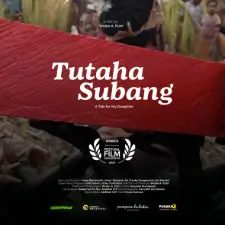
Beginning the film with the subtitled quote which works as a prayer, lament, and promise between the women of South Papua and their ancient ancestors–backed by the sound of the Awyu people rhythmically ululating in their unique high pitched call– immediately gives a feeling of anticipation that this will be a story about the clash between traditional practices and colonialism.
A tale of resistance from a mother to her daughter.
A history of women carving paths to education through occupation and imperialism being told to the future of their community.
A prayer of hope before time runs out.
Written and narrated by Rikarda Maa to her yet to be born daughter Mila, Tutaha Subang, originally conceptualised in 2023 between a filmmaker and her storyteller, is a letter about what it means to be a woman in today’s society, to a daughter crafted with love and reverence. She says “In this land, being born as a woman can mean a good omen, or the opposite.”, drawing a clear reference to how in indigenous Indonesian culture, and in all patriarchal women are seen as the life givers, representative of the bounty of Mother Earth and nature, and the nurturers of a society.
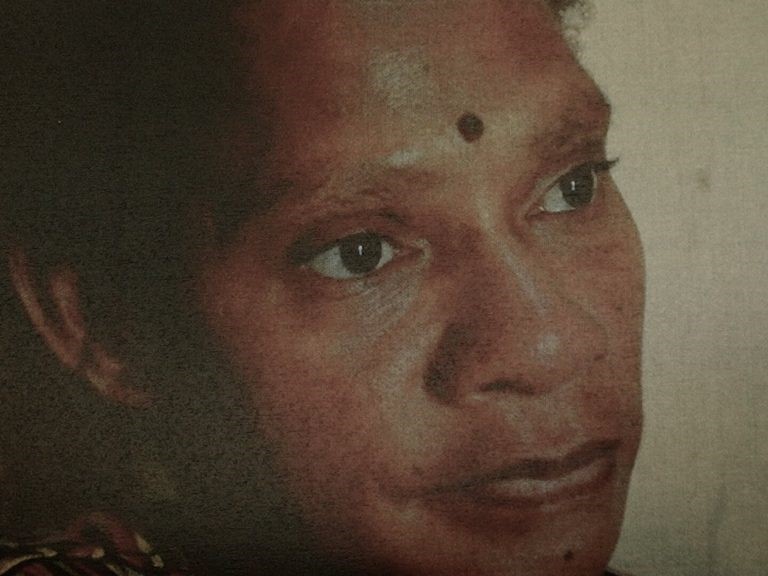
She discusses how on the inverse of that, girls and women are looked down upon as being the weaker sex, less dominant, and more easily discardable by the same societies they give birth to and build up. She points out to Mila to consider the contradictions and hypocrisy that men so easily entrap themselves with and as a consequence their own people and the whole world into a belief that ultimately ruins everything, including the environment. Selling and pawning off mother nature in bits and pieces.
Rikarda no so subtly alludes out how mans’ need to dominate women is reflected in their destruction of nature, shown through the extensive desecration and decimation of hundreds of thousands of acres of forests for logging, mineral ore mining, and palm oil plantations replacing indigenous plant species like the nibung and sago tree, going as far back to the first arrival of the Dutch colonialists to the regions of West Papua, South Papua, Papua New Guinea, and the eventual formation of the hundreds of islands that now make up Indonesia.
As there’s no separating European colonialism with the advancement of Chrsitian ideologies, Rikarda teaches how the religion and the politics grafted onto it by white men, was and is still used as a means to erase Indigenous identity, culture, and beliefs including those related to spiritualism and respect for nature.
Through the use of color archival photographs and short reels, Wulan takes a unique approach to show aspects of South Papua’s history by having the camera lens focus solely on the images shown. There’s no moving film reel. No dramatic shifts in aspect ratio or scene transitions. Just the filmmaker’s eye, the audience’s eyes looking at South Papua as it once was as a mother talks about the way it is and hopes it can become. As a historian, Wulan has a keen understanding on how to sequence the photographs to tell a story about the past, and gets that sometimes less is more. She, editor Harryaldi Kurinawan who along with co-sound designer Abdillah Sitompul, fully understood that the history is fascinating all on its own without need for embellishments.
Interesting visual techniques Wulan utilized are the accompaniment of images of eyes and ears with mention of local men being easily swayed and seduced by capitalist ideals, and footage of the Sassi Procession, a practice of erecting of giant wooden crosses painted blood red to mark borders on land that was once considered whole in nature by the Awyu, and many other tribes whose way of life and existence are being threatened by the expansion of palm oil plantations on their ancestral lands, and the occupation of the Digul River once held as a sacred location in the region, by heaving machinery shipped from the West.
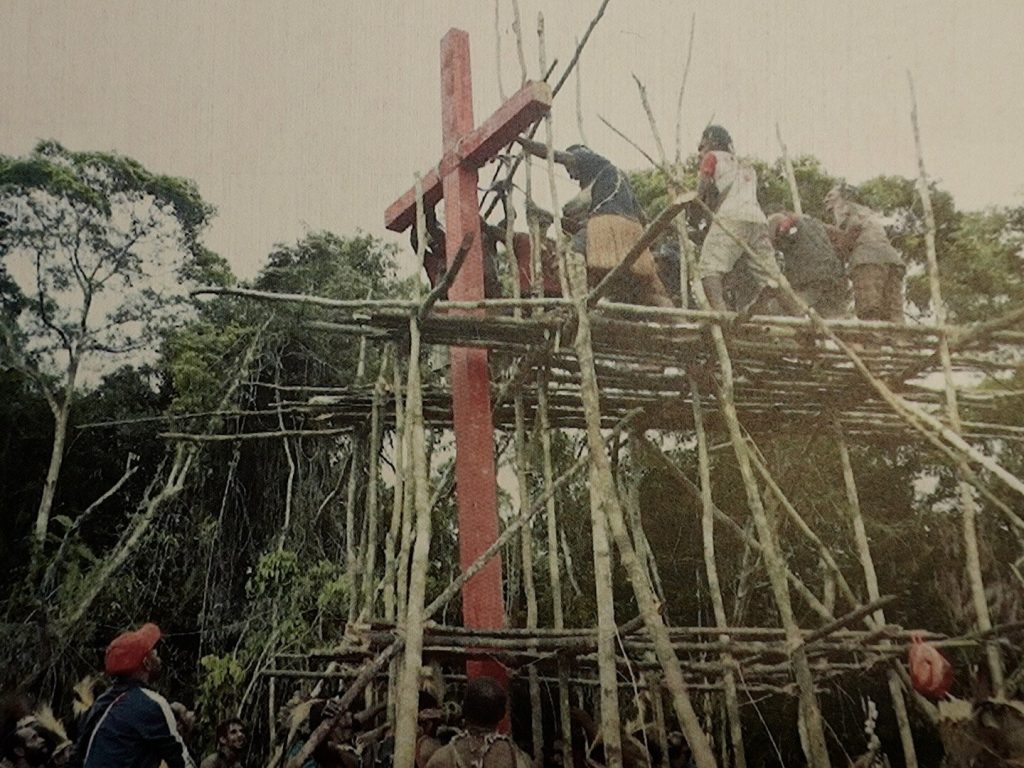
There’s no ignoring what Rikarda and Wulan are so eloquently saying with their words and artistry; that for mother Earth and women alike, the burden, the labor of cultural separation through the violence of patriarchy is to be borne like a cross not dissimilar from that carried on his back along the Via Dolorosa.
In truth Tutaha Subang: A Tale of My Daughter is a letter to all of us that should be read, heard, and listened to, because it speaks to a problem that ironically knows no borders as we’re all interconnected by these same struggles created under capitalism, colonialism, and imperialism.
Following the film’s screening at Minikino, I spoke with Wulan about listening to Rika’s story for Mila and being inspired to make this unique film combining South Papuan and Indonesian history based on a letter, and how the visual style creates an almost meditative exploration of colonialism and patriarchy.
The film screened at the 2025 Minikino Film Week II in Bali, Indonesia, and has been nominated for multiple awards, and won the Nongshim Award for Best Indonesian Short Film at Jakarta Film Week, and was selected for the “Time for Papua” exhibition at the Wereldmuseum Leiden in 2026.
*Images courtesy of Minikino.org
Carolyn Hinds
Freelance Film Critic, Journalist, Podcaster & YouTuber
African American Film Critics Association Member, Tomatometer-Approved Critic
Host & Producer Carolyn Talks…, and So Here’s What Happened! Podcast
Bylines at Authory.com/CarolynHinds
Twitter & Instagram: @CarrieCnh12
#TutahaSubang #ATaleOfMyDaughter #FilmmakerWulanPutri #kcrush #MinikinoFilmWeek11 #kcrushfilminterview #kcrushamerica #kcrushmagazine #Bali #Indonesia #2025MinikinoFilmWeek11 #SouthPapua #editorHarryaldiKurinawan #cosounddesignerAbdillahSitompul
User Review
( votes)Related Articles
Minikino Film Week 11 Interview with ‘Kotowari 断り’ Filmmaker Coralie Watanbe Prosper and Actress Rei Watanabe
In her 2025 dramatic short film Kotowari 断り, writer and director Coralie Watanabe Prosper takes on the challenge of showing the chaotic world of the French immigration system through the eyes of Saki, a Japanese woman who just wants to feel... Read More
Minikino Film Week 11 – Interview with ‘Pelabuhan Berkabut (Fish, Please!)’ Filmmaker Haris Yuliyanto
As a storyteller, filmmaker Haris Yuliyanto has dedicated his work to presenting the many social issues affecting the people of coastal regions of Semarang, Indonesia, and his 2025 short film ‘Pelabuhan Berkabut (Fish, Please!)’, is no... Read More
Fantasia IFF 2025 – KCrush Interview with ‘Blank Canvas / Kakukaku Shikajika’ Co-writer and Artist Akiko Higashimura
Award-winning manga author and illustrator Akiko Higashimura is probably one of the very few people to pen their own autobiography, in manga form no less, have that autobiography adapted into a film, and be co-writer of the screenplay and artistic... Read More
Minikino Film Week 11 – KCrush Interview with ‘Traces of My Brother’ Creative Producer Brahmantyo Putra
“Where is the justice?” is the question that builds the foundation of filmmaker Riani Singgih’s documentary short Traces of My Brother / Dia Pergi dan Belum Kembali, which screened at the 2025 Minikino Film Week in Bali, Indonesia. On May 15,... Read More
Fantasia IFF 2025 – KCrush Interview with ‘Fragment’ Filmmaker Kim Sung-yoon
For his award-winning debut feature film Fragment (Pa-pyeon), which had its North American premiere at the 2025 Fantasia International Film Festival, writer and director Kim Sung-yoon (Kim Ji-young: Born 1982) took on the challenge of examining... Read More
Minikino Film Week 11 – KCrush Interview with ‘Water Sports’ Producer Alemberg M. Ang
Disclaimer: Some of the topics discussed would be mature and provocative in theme – the topics discussed are mature in nature. Award winning production designer, writer and director Whammy Alcazaren (Bold Eagle, Whether the Weather... Read More
Fantasia IFF 2025 – KCrush Interview with ‘I Fell In Love with a Z Grade Director in Brooklyn’ Filmmaker Kenichi Ugana and Actress Ui Mihara
Oh, to be an artist who’s lost the will to create! What trials the creative process can be when you possess more passion than you do money. In his latest film (well at the time of writing this anyway) I Fell In Love with a Z Grade Director in... Read More
Minikino Film Week 11 & KCrush Interview with Fransiska Prihadi, Matt Lloyd, and Holly Márie Parnell
From the 11th of September to the 19th, aspiring, new, and veteran filmmakers from all across B, and all areas of world gathered in Denpasar, Bali for the very successful 11th Minikino Film Week (MFW) Bali International Short Film Festival. Since... Read More
KPOPPED with STAYC: A Conversation on Creativity and Connection
Fresh off their participation in KPOPPED, STAYC sat down with KCrush for a written interview to share their thoughts on the experience and what it means for their ongoing journey. Known for their dynamic performances and unique vocal colors, the... Read More
Leave a Reply