
Played by Rei Watanabe–who herself is a dancer that had to wade her way through the long drawn out complicated process of the French immigration sysetm–Saki comes to a crossroads in her life where she has to choose who she wants to be as a person, a citizen, and spouse to her wife Tom (Isaline Prévost Radeff).
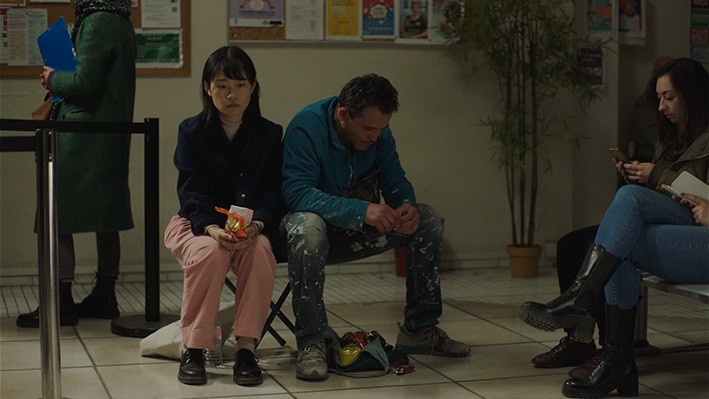
Those who’ve never had to make the difficult choice to emigrate to another country where the culture, language, and people are completely different to your own, the true reality of uprooting your life and rebuilding from scratch is at best an abstract concept that’s viewed more as a permanent vacation, rather than the mentally and financially exhausting process it is.
Having Tom, provides Saki with the emotional support that is vitally important, but this unfortunately, eventually stops being enough when after two years of repeated summons to the provincial foreign service office Saki is met with yet another rejection.
For the couple, Saki obtaining Permanent Resident status means they can truly start living their lives as a happy couple in what they dream to be an idyllic life as queer lesbians in a city that accepts that aspect of their identities. Tom, who is white, believes that as long as this happens, there’s nothing else to worry about, but she doesn’t quite grasp how isolated Saki feels as a Japanese woman learning a second language in a city where she doesn’t have community support.
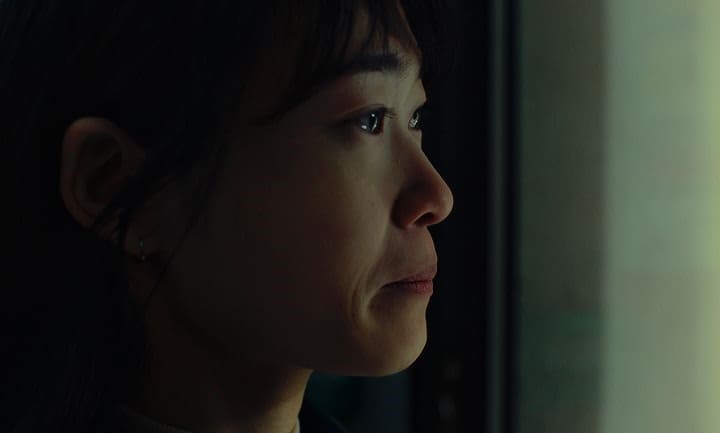
Tom, like many people in cities and countries where being a naturalised citizen provides a certain level of social and legal protection and acceptance, doesn’t understand how frustrating it is to be constantly told that as an immigrant, every step you’re taking just isn’t far enough, and that after jumping over yet another bureaucratic hurdle there’s one more suddenly being placed in front of you to make the finish line further out of reach. As a French national, Tom has never had to go to a government office where standing in line for hours on end is a trial in and of itself to prove just how much you want to belong and be accepted by a country not your own.
Because of this, Saki begins to question if all of the anxiety caused by the seemingly never ending forms to be filled out, the hours upon hours of standing in lines in barely lit government buildings, and borderline humiliating probing questions by white people who can’t tell the difference between Japanese and Mandarin, or a Nigerian from an Algerian, is worth it. She considers if her relationship with Tom and the life they hope to build will be worth the years of being told she doesn’t belong and being seen as an outsider even if she does get status..
Once inside the government office, Saki is surrounded by the dozens of people who rose before sunrise to wait for information on their fates determined by the arbitrary nature of administrative red tape. She recognises the tense shoulders and faces, the fear that presents as anger in a father desperately pleading to finally be approved as a permanent resident because his life and that of his children literally depend on it. Feeling overwhelmed, Saki rushes to the bathroom where she finally breaks down from the anxiety pressing on her chest and fear that she may have to leave the life she’s building behind.
Desperate to take a break from the sounds of stress in frustrated exhalations, the judgemental rustling of paper, and the dismissive repetitive order of “Next!” by the clerks, Saki rushes to escape and find respite in an empty bathroom, where Rei performs a beautiful interpretive dance of everything that Saki has been unable to verbally express. As a trained dancer, Rei knows how to let her body move with and through what she’s feeling, and with her gracefully expressive movements, it feels like for just a brief moment, after the tears have been allowed to flow, and wiped away, Saki finds peace.
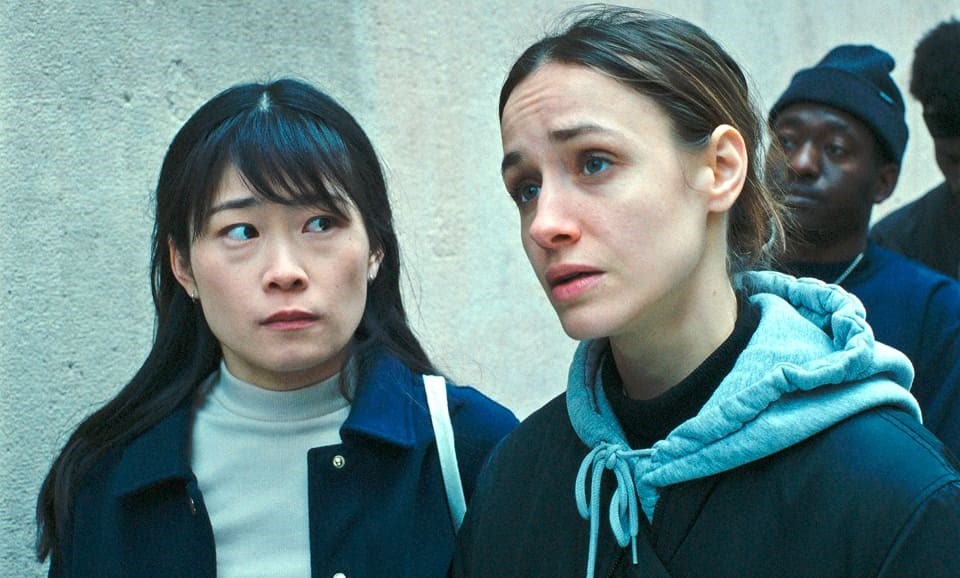
She reenters the lobby, and is offered a small foldable stool by a man covered in paint who notices Saki’s emotional state. His name is Habib Labidi, he’s a painter who’s been waiting years to receive his resident card and is therefore very familiar with the process. This interaction with Habib is like a breath of fresh air for Saki, because finally she can talk to someone who understands exactly how she feels, and isn’t wasting her time with platitudes to dismiss her worries. Not being a trained actor, Habib is essentially playing himself, and this works beautifully in a film that at its heart is about people just trying to be seen and accepted for who they are. He and Rei work wonderfully together and provide a much needed moment in a story where much of the undertone is one of tension.
In the Japanese language, 断り, tranlated to kotowari in Romanized English, has multiple meanings: permission, refusal, logic, or excuse depending on the context and which Kanji symbol is used. For her interpretation, Coralie chose the Kanji symbolising rejection. She’s quite pointedly asking audiences to look at the ways not just the French government, but all colonial governments dangle social acceptance through citizenship like a medal that must be continually fought for in a never ending race, because even once someone finally grabs it, they’re still stigmatised as being an immigrant, a term heavily stigmatised with negative connotations applied to Person of Color, while white people get to be called “expats”, and “digital nomads.” But that’s a separate discussion.
By choosing Kotowari 断りas her film’s title Coralie created a compelling story about how the system’s rejection of Saki as a Japanese person and the many others going through this uphill climb for days, months, and years on end, takes a heavy toll on their mental and emotional health, affecting their sense of self and relationships with their loved ones. And this is all without even talking about the racism, xenophobia, and bigotry directed towards People of Color from countries experiencing militarised and economic conflict due to European and Western imperialism and colonialism.

In the end, Saki herself has to decide if rejecting the process, and thereby France itself will be the only way she can establish agency for her own destiny and once again feel comfortable with who she is and wants to be.
For Kotowari 断り’s premiere at Minikino Film Week 11 in 2025, Corali, Rei, and I had a chance to sit and discuss their personal experiences with the immigration process, creating a film that gives the female perspective, and how working with an untrained actor like Habib gave the film unexpected layers of nuance and warmth and inspired them as filmmaker and performer.
Kotowari 断り has won multiple awards at various international film festivals including Winner of The Audience Award Kino Forum Sao Paulo ISFF, Winner of Best Acting for Rei at the Tietê Int Film Awards, and Winner of Best LGBTQ+ Film at Monza Film Fest
Images courtesy of cineffable.fr
Carolyn Hinds
Freelance Film Critic, Journalist, Podcaster & YouTuber
African American Film Critics Association Member, Tomatometer-Approved Critic
Host & Producer Carolyn Talks…, and So Here’s What Happened! Podcast
Bylines at Authory.com/CarolynHinds
Twitter & Instagram: @CarrieCnh12
#MinikinoFilmWeek11 #kcrushinterview #Kotowari #filmmaker #CoralieWatanbeProsper #actressReiWantanabe #kcrushamerica #kcrushmagazine #internationalfilminterview
User Review
( votes)Related Articles

Minikino Film Week 11 – Interview with ‘Pelabuhan Berkabut (Fish, Please!)’ Filmmaker Haris Yuliyanto
As a storyteller, filmmaker Haris Yuliyanto has dedicated his work to presenting the many social issues affecting the people of coastal regions of Semarang, Indonesia, and his 2025 short film ‘Pelabuhan Berkabut (Fish, Please!)’, is no... Read More
Fantasia IFF 2025 – KCrush Interview with ‘Blank Canvas / Kakukaku Shikajika’ Co-writer and Artist Akiko Higashimura
Award-winning manga author and illustrator Akiko Higashimura is probably one of the very few people to pen their own autobiography, in manga form no less, have that autobiography adapted into a film, and be co-writer of the screenplay and artistic... Read More
Minikino Film Week 11 – KCrush Interview with ‘Traces of My Brother’ Creative Producer Brahmantyo Putra
“Where is the justice?” is the question that builds the foundation of filmmaker Riani Singgih’s documentary short Traces of My Brother / Dia Pergi dan Belum Kembali, which screened at the 2025 Minikino Film Week in Bali, Indonesia. On May 15,... Read More
Fantasia IFF 2025 – KCrush Interview with ‘Fragment’ Filmmaker Kim Sung-yoon
For his award-winning debut feature film Fragment (Pa-pyeon), which had its North American premiere at the 2025 Fantasia International Film Festival, writer and director Kim Sung-yoon (Kim Ji-young: Born 1982) took on the challenge of examining... Read More
Minikino Film Week 11 – KCrush Interview with ‘Water Sports’ Producer Alemberg M. Ang
Disclaimer: Some of the topics discussed would be mature and provocative in theme – the topics discussed are mature in nature. Award winning production designer, writer and director Whammy Alcazaren (Bold Eagle, Whether the Weather... Read More
Fantasia IFF 2025 – KCrush Interview with ‘I Fell In Love with a Z Grade Director in Brooklyn’ Filmmaker Kenichi Ugana and Actress Ui Mihara
Oh, to be an artist who’s lost the will to create! What trials the creative process can be when you possess more passion than you do money. In his latest film (well at the time of writing this anyway) I Fell In Love with a Z Grade Director in... Read More
Minikino Film Week 11 & KCrush Interview with Fransiska Prihadi, Matt Lloyd, and Holly Márie Parnell
From the 11th of September to the 19th, aspiring, new, and veteran filmmakers from all across B, and all areas of world gathered in Denpasar, Bali for the very successful 11th Minikino Film Week (MFW) Bali International Short Film Festival. Since... Read More
KPOPPED with STAYC: A Conversation on Creativity and Connection
Fresh off their participation in KPOPPED, STAYC sat down with KCrush for a written interview to share their thoughts on the experience and what it means for their ongoing journey. Known for their dynamic performances and unique vocal colors, the... Read More
Fantasia IFF 2025 – KCrush Interview with ‘The Woman’ Director Hwang Wook and Producer Lee Dong-min
For the world premiere of their latest feature The Woman at the 2025 Fantasia International Film Festival, writer and director Hwang Wook and producer Lim Dong-min presented their psychological thriller about a woman who appears to be everywhere,... Read More
Leave a Reply